If you aren't any of those things, then feel free to stop reading and navigate your way to another blog.
This post is a long time coming, written largely out of a desire to offer a bit of my own (limited) experience in the hopes of saving others some time googling obsessively and coming up short.
It wasn't until we lost Thomas that I realized there was a severe shortage of literature out there to help hurting mothers. And the range of reasons a woman might hurt is vast: infertility, miscarriage, stillbirth, or early infant death.
So in short, here is my (non) exhaustive list of books that I read, and that I might recommend to that woman whose heart is full but whose arms are empty:
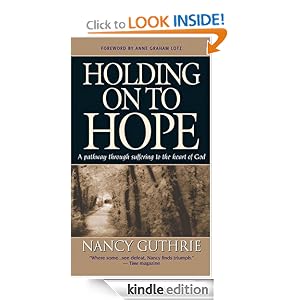
1. Holding on to Hope by Nancy Guthrie
This book is a sort of walk through the book of Job through the eyes of a woman (Guthrie) who lost two of her children (Hope, hence the title, and Gabriel) as infants to a fatal genetic disorder. It was incredibly insightful and allowed me to gain a deeper perspective of Job's suffering. Guthrie is a faithful woman of God and as I read, she called me back to Scripture repeatedly when I wanted to wallow.

2. A Grief Observed by C.S. Lewis
Written after his wife Joy died of cancer, this book is perhaps the rawest of all of his books. His grief was clearly fresh, and if you chose to read this book in isolation from the rest of his works, you might question his salvation. You are allowed into his grief in the most intimate way; in one paragraph, he wonders whether God is just a "cosmic sadist" and in the next, he confesses that he was angry the night he wrote that, and says he ought to try again. One of the quotes I remember most vividly is, "Who knew grief felt so like fear?" So true.
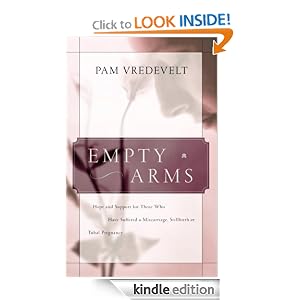
3. Empty Arms by Pam Vredevelt
This book is probably more technical or practical in nature than spiritual, but given the shortage of books on this topic, I read it in pieces. In it she walks through the process of grieving and also provides help to friends who aren't sure how to respond to a woman's loss. She is a believer, but this was perhaps the least favorite of the books I read. Still worth skimming, though.
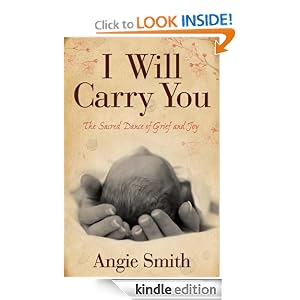
4. I Will Carry You: The Sacred Dance of Grief and Joy by Angie Smith
A sweet friend of mine found this book on Amazon and bought me a copy. Written by the wife of the lead singer of Selah (go way back, guys... like, back to the Steven Curtis Chapman days), she tells the story of carrying her daughter to term, whom doctors had said suffered from a condition that was "incompatible with life." Her daughter lived only minutes after she was born.
While this wasn't the deepest and most theological of books, it didn't matter because her story of faithfulness to Christ and finding joy in the midst of intense and overwhelming grief was medicine for me during a lonely time. For those women to whom God has bestowed this particular trial, I would recommend reading it--but keep the tissues close by. And a lot of them.
5. Stepping Heavenward by Elizabeth Prentiss
Elizabeth Prentiss, who authored the hymn "More Love to Thee" after the loss of her two children (newborn and age 4), wrote this fictional "journal" from the perspective of a young woman, Katherine, age 16. The journal continues well into her old age, and it is essentially a walk through her sanctification. She, too, loses young children--and as I read, I was reminded soberly that our children are truly not our own. They are the Lord's, entrusted to us only by God's kindness. This, for me, is an ongoing lesson that I have yet to perfect. And for the woman who has yet to have children, it is a reminder that children are not a right that we ought to expect will come in our time and in the way we want them to.
6. Morning Will Come by Sandy Day
This book is a compilation of stories of women who have suffered from infertility or a loss of any kind. Having only known one person who had experienced a stillbirth before we did, I found this book to be helpful in reminding me that I wasn't alone in my loss, and it helped to read the perspective of women years out from a loss--time had given them a certain perspective that I couldn't understand yet. My recommendation is to read a story at a time, every few weeks, even. The weight of sadness (having just lost Thomas) was too much to read so many stories at once.
7. The Bible
Did you really think I would leave out the only Book that has all the answers? The Book that tells of a God so great He is able to redeem even the most barren of women? Of course I found an infinite amount of comfort and encouragement from the Scriptures, particularly the Psalms (Psalm 27-30, Psalm 34, 42, 77, 18, 62-66, etc.). I was called back constantly to the greatness of Christ, my lowly estate as His sheep, and His love and care for even the least of these.
Despite whether you are a woman who has experienced any (or all) of these issues, each of these books are worth the read. If for no other reason, it allows you to enter into the world of someone who is suffering and offer, however inadequately, a glimpse into that pain. Feel free to leave your comments about any of these books--I'd love to hear from others who have read one (or many)!
